Now
Supporting Energy Communities
DECAFF – Decarbonising Differdange was a project, which concluded in September 2025. It was part of the broader European initiatives Climaborough and NetZeroCities, funded by the European Union, and aimed to promote a wider knowledge among citizens regarding energy communities: what they are, how they work, and which funds and incentives are available in Luxembourg.
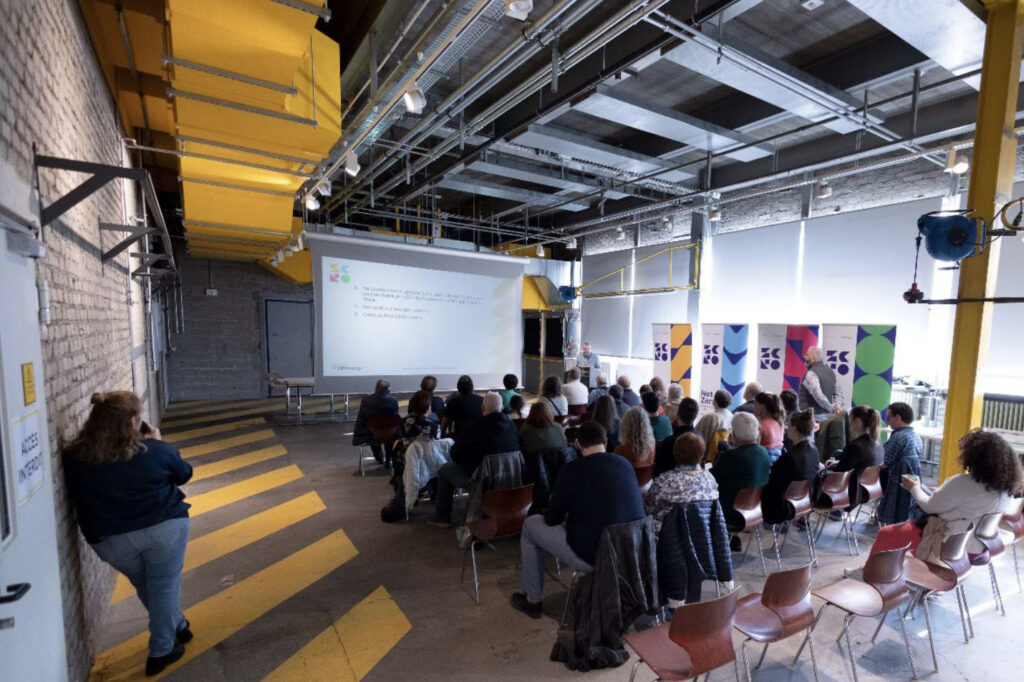
A talk with Diego Fallah and Luc Arend, project managers in the Municipality of Differdange, who coordinated the DECAFF – Decarbonising Differdange project.
How do you see the debate on energy communities evolving locally and nationally?
In the last years Luxembourg has integrated new legislation on energy communities. Luxembourg’s national renewable energy framework and national actors such as the Klima-Agence are increasingly framing energy communities as a recognized instrument. This means that policy and market rules are moving from conceptual to operational, which opens real possibilities but also raises questions (e. g. metering, grid integration, billing, governance).
As for the city of Differdange, the debate moved from general interest to concrete, citizen-centered action. We’ve run participatory events and workshops (including DECAFF in-person sessions and webinars) where neighbors co-created “virtual” energy communities and tested the DECAFF app — shifting the conversation from “what is it?” to “how do we set one up and measure impact?”
How do you think the DECAFF project contributed to strengthening the debate and encouraging initiatives on energy communities?
DECAFF has acted as a practical bridge by packaging learning, simulations and a simple app, enabling citizens to experiment with the relatively new concept of energy communities before making investments or taking complex legal steps.
The project’s local events and webinars have brought together residents, municipal staff, and external experts, making the topic more tangible and reducing the threshold for launching new initiatives.
Have you noticed changes in citizens’ awareness and interest?
Yes. Media coverage and local turnout show rising curiosity and engagement: residents now ask about concrete models (cooperatives, a.s.b.l.), how to join/share solar production, and how to access tools and finance. The tone has shifted from passive interest to people seeking to form groups and test the DECAFF tools in their neighborhoods.
Local citizen workshops within the NetZeroCities framework also show growing cross-topic awareness (energy + waste + mobility). However, there is still a long way to go in order to achieve a point where energy communities become mainstream.
What added value has DECAFF brought to the Municipality (knowledge & tools)?
Practical gains for the Municipality include:
- ready-to-use engagement formats (workshop designs, webinars) and an evidence base of what motivates residents.
- a digital tool (DECAFF app/simulations) for demonstrating collective self-consumption scenarios and behavior change.
- the integration of energy communities in our NetZeroCities commitments through the Climate City Contract.
- the exchange of best practices with examples from all over the European Union.
What role can the Municipality play to support the creation & spread of energy communities?
We see multiple complementary municipal roles:
- Promotion: host workshops, help neighbors meet, run matchmaking events (DECAFF events can serve as template).
- Information: provide template statutes, simple technical guidance and signposting to Klima-Agence resources so citizen groups can choose workable legal forms and understand technical constraints.
- Catalyst: de-risk first pilots (offer roof space on municipal buildings, seed small grants, or partner in crowdfunding / crowdlending trials) so projects reach demonstrable scale.
- Regulatory liaison: act as the local interlocutor with national regulators and distribution system operators to clarify metering, billing and grid-connection procedures.
- Replication: document lessons, share operational models with NetZeroCities / peer cities, and with other Luxembourg municipalities, so good practice travels faster.
Audio playback of the page content is active.
Stop playback