Now
How can you tell if artificial intelligence is being used?
The European AI Act is now fully in effect: what you need to know
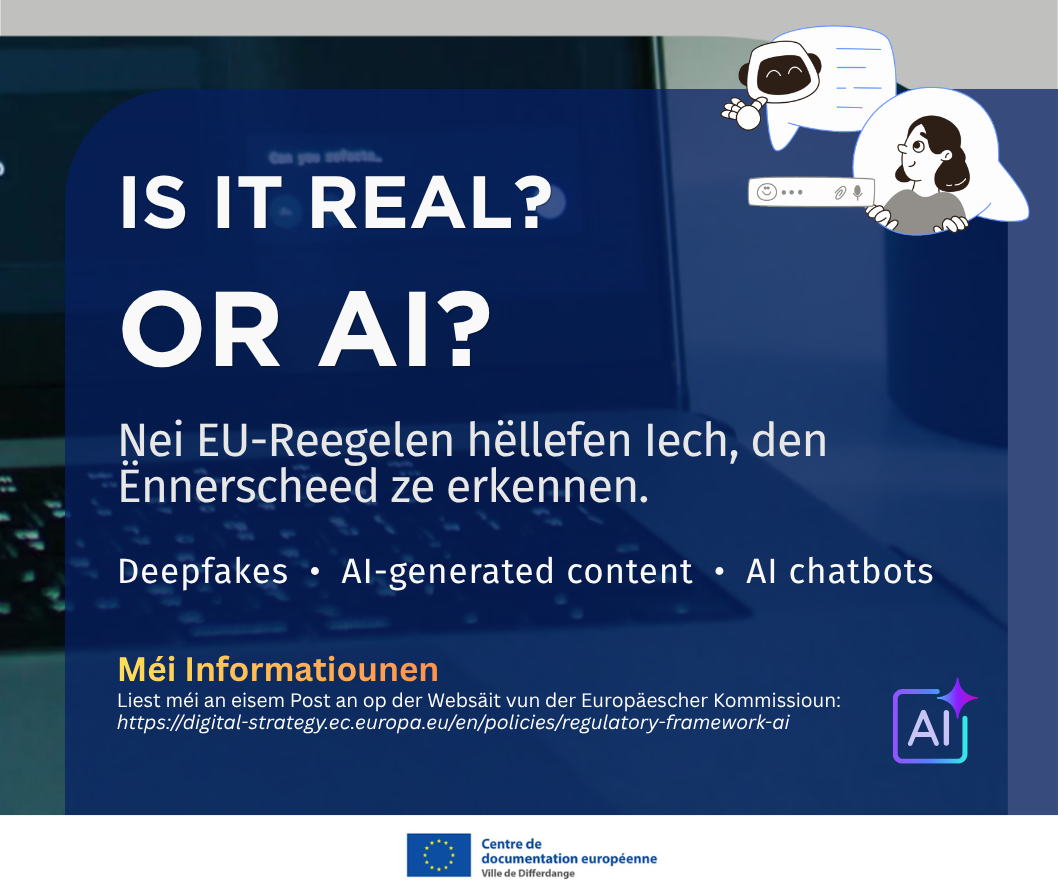
Artificial intelligence is advancing at breakneck speed. Texts written by ChatGPT, AI-generated images and videos, voice cloning, deepfakes: these phenomena are now part of our daily lives. At the same time, it is becoming increasingly difficult to distinguish machine-generated content from human-generated content, which creates new risks of manipulation and misinformation.
Transparency Rules for AI
The European Artificial Intelligence Regulation (AI Act) aims to make AI safer and protect citizens’ rights. It introduces stricter rules for high-risk systems and requires greater transparency regarding the use of AI. It also prohibits certain particularly harmful uses, notably systems designed to manipulate or exploit people.
As of August 2, 2026, new transparency rules for AI will take effect. The European Commission has also published practical guidelines explaining how these rules should be implemented.
What does this mean for you?
The basic concept is easy to understand: you have the right to know when AI is involved, which allows you to stay informed and safe.
In practical terms:
- Interacting with AI: You must be informed when you are interacting with an AI system rather than a real person, for example, when using a chatbot or an AI agent;
- Deepfakes: Deepfake images, sounds, and videos must be clearly labeled;
- Public interest information: Certain AI-generated texts published to inform the public about matters of general interest must also be identified as such;
- Emotion and biometric data recognition: You must be informed when certain AI systems are used to recognize emotions or categorize people based on biometric data.
These rules aim to make AI more transparent and trustworthy, while helping everyone make informed decisions about what they see, hear, and read.
What does this mean for organizations?
Organizations that use AI in their public communications must also be familiar with these rules. Certain content generated or manipulated by AI must be clearly labeled so that the public knows when AI has been used. The European Union has developed dedicated pictograms to make it easier to recognize content generated or modified by AI: EU icons for labeling AI-generated content / Shaping Europe’s digital future.
Stay vigilant
AI opens up new possibilities, but it also poses many risks and challenges. Labels and icons help us recognize content generated or manipulated by AI, but they are no substitute for our own judgment.
Think critically, consult reliable sources, and reflect before interacting with AI or sharing content. You’re helping to protect yourself and others.
For the latest information on AI and new regulations, please consult the official European Union sources below.
More information
The Commission Begins Enforcing the AI Act Rules and New Transparency Requirements on August 2
Code of Best Practices on Transparency for AI-Generated Content
Audio playback of the page content is active.
Stop playback