Now
State of the Union 2026
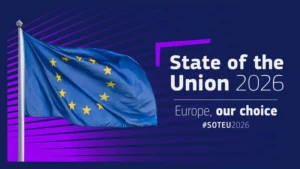
On Wednesday, 16 September 2026, European Commission President Ursula von der Leyen will deliver the annual State of the Union address (SOTEU). It will be broadcast live with simultaneous interpretation in all 24 official EU languages.
What is SOTEU?
SOTEU stands for the State of the European Union. It is a speech delivered every September by the President of the European Commission to the European Parliament. The speech covers the EU’s main political priorities, recent initiatives and legislative proposals for the year ahead.
A stronger Europe
The 2025 State of the Union speech called for a more united, independent and resilient Europe. The President stressed the need to strengthen Europe’s defence, economy and energy independence, support Ukraine, and protect democracy and European freedoms.
Why does it matter?
The priorities announced during SOTEU often lead to concrete EU laws, funding programmes and regional initiatives that affect our daily lives. The speech looks back at the past year and presents the EU’s priorities for the year ahead. The President also explains how the Commission plans to tackle the EU’s most pressing challenges.
EU decisions affect many aspects of our daily lives – from energy and consumer rights to jobs, transport and security. Following the State of the Union is a simple way to understand what the EU is planning and what it could mean for you.
Where to watch?
You can watch the State of the Union address live online on 16 September 2026, with interpretation available in all 24 official EU languages. Check the State of the Union – European Commission for information about the speech.
You can also follow the European Commission on Facebook for SOTEU news and highlights. For local updates, visit the official account of [Representation of the European Commission in Luxembourg](State of the Union 2026
Want to learn more about the EU and how its decisions affect you? Visit the European Documentation Centre in Differdange. Sources: SOTEU 2026
Look for #SOTEU2026 on social media for the latest updates.
Want to learn more about the EU and how its decisions affect you? Visit the European Documentation Centre in Differdange.
Audio playback of the page content is active.
Stop playback